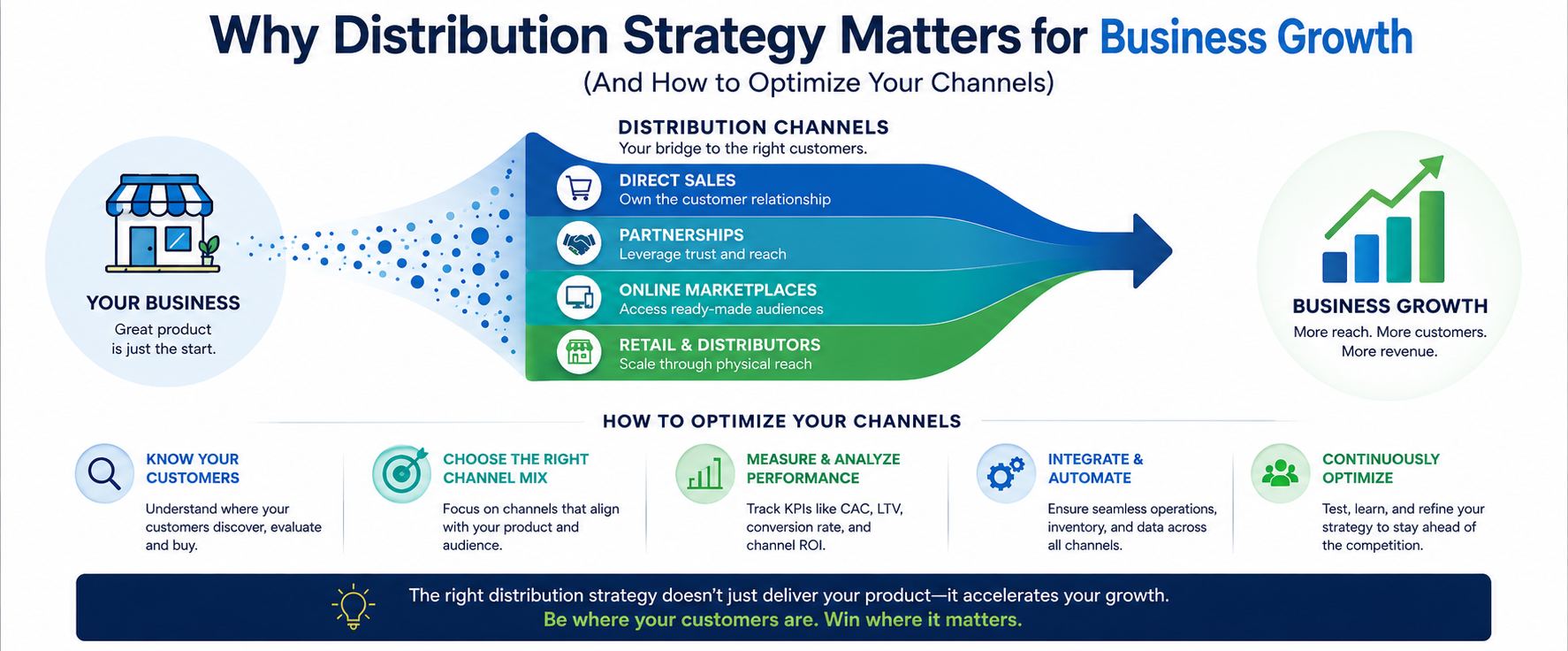
Why Distribution Strategy Matters for Business Growth (And How to Optimise Your Channels)
Adarsh Singh
29 August 2026
A business can engineer a groundbreaking product, build a flawless go-to-market campaign, and generate immense demand, but if the product doesn't reach the customer efficiently, the entire operation falls flat. This is precisely why distribution strategy matters for business growth. A well-planned distribution model bridges the gap between production and the end consumer, directly impacting profit margins, brand perception, and competitive advantage. In today's hyper-connected marketplace, understanding how to leverage different types of distribution channels in business is no longer just operational—it is a core marketing and growth lever.
What is a Distribution Strategy?
A distribution strategy defines the methods, intermediaries, and pathways a company uses to deliver its goods or services to the end consumer. The primary goal is to move inventory from the manufacturer to the buyer as efficiently and cost-effectively as possible. Whether you are selling a B2B SaaS product or a physical consumer good, your strategy governs how accessible your product is. It touches every part of the supply chain, from warehousing and logistics to digital e-commerce storefronts and retail partnerships.
The Direct Link Between Distribution Channels and Business Growth
Selecting the right distribution channels does more than just move boxes; it acts as a catalyst for scalable growth. Here is how a refined strategy drives the bottom line: Expanded Market Reach: The right mix of channels allows a business to penetrate new geographical regions or demographics that would be inaccessible through direct sales alone. Reduced Operational Costs: Partnering with wholesalers or third-party logistics (3PL) providers helps share the financial burden of warehousing, inventory management, and shipping. Enhanced Customer Experience: Modern consumers demand convenience. A reliable distribution framework ensures products are available when and where buyers want them, building brand trust and preventing stockouts that drive buyers to competitors.
Types of Distribution Channels: Direct vs. Indirect
Understanding the nuances of distribution models is critical for aligning your operations with your target market's buying habits.
- Direct Distribution Strategy
In a direct model, the manufacturer sells straight to the consumer without any intermediaries. This can happen through proprietary e-commerce websites, physical company-owned storefronts, or direct sales teams. Direct distribution offers maximum control over the brand narrative and customer data, and it typically yields the highest profit margins.
- Indirect Distribution Strategy
Indirect distribution involves third-party intermediaries—such as wholesalers, distributors, retail chains, or value-added resellers (VARs)—who take the product to market. While this slightly reduces profit margins per unit, it significantly amplifies market penetration and offloads the logistical complexities of handling individual consumer transactions.
The Rise of Omnichannel Distribution Strategy
In recent years, the omnichannel distribution strategy has become the gold standard, particularly for B2C retail and modern B2B commerce. Instead of siloing direct and indirect channels, an omnichannel approach seamlessly integrates them. For example, a customer might discover a product via a social media ad, purchase it through a mobile app, and choose to pick it up at a local third-party retail partner. This strategy requires advanced inventory tracking and tight synchronization between marketing and supply chain teams, but it delivers a highly customer-centric buying experience.
How to Choose the Right Distribution Strategy for Your Company
There is no one-size-fits-all approach. Selecting the optimal model requires a careful analysis of your business landscape: Product Type: Routine, low-cost goods (like hand soap) require an intensive distribution strategy (placing the product in as many retail outlets as possible). Conversely, high-ticket items (like luxury cars or enterprise software) benefit from an exclusive distribution strategy to maintain prestige and control. Target Audience Preferences: Where does your ideal customer naturally shop? Younger demographics heavily favor mobile e-commerce and rapid fulfilment, while traditional enterprise buyers may require extended consultative sales through certified channel partners. Market Competition: Analysing competitor distribution can reveal lucrative gaps. If competitors dominate big-box retail shelves, shifting focus to a robust direct-to-consumer (DTC) digital model might offer a strong competitive advantage.
Frequently Asked Questions (FAQs)
-
What is the main difference between direct and indirect distribution channels? Direct distribution involves selling a product straight from the manufacturer to the end consumer (e.g., via a company website). Indirect distribution uses intermediaries like wholesalers, distributors, or retailers to sell the product to the final buyer.
-
How does an intensive distribution strategy work?
An intensive distribution strategy aims to place a product in as many retail locations and markets as possible. It is heavily used for low-cost, fast-moving consumer goods (FMCG) where convenience and immediate availability are the primary drivers of purchase.
- Why is an omnichannel distribution strategy important for business?
An omnichannel strategy unifies the customer experience across all physical and digital touchpoints. It is important because it allows consumers to interact with a brand on their own terms, leading to higher satisfaction, better retention rates, and increased sales opportunities.
- Can a poor distribution strategy impact profit margins?
Yes. A flawed distribution strategy can lead to excess inventory storage costs, frequent stockouts, delayed shipping, and heavy reliance on inefficient intermediaries, all of which erode profit margins and damage customer relationships.
- What factors should I consider when choosing a distribution channel?
You should evaluate your product type (perishable, luxury, routine), your target audience's buying behavior, your internal budget for logistics, the level of control you want over the brand experience, and the current competitive landscape